

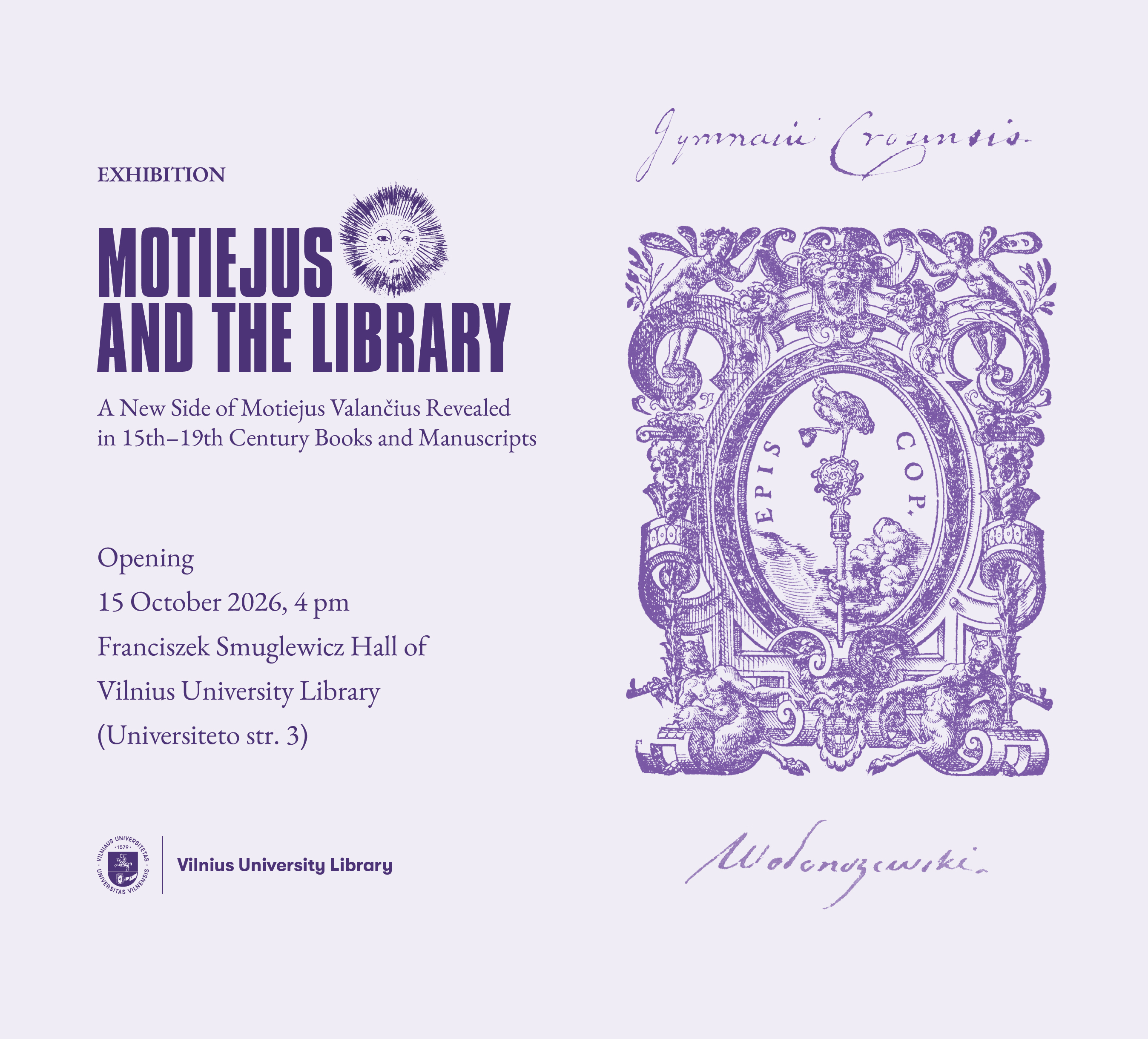
 To mark the 225th birth anniversary of Motiejus Valančius, the exhibition “Motiejus and the Library” will open at Vilnius University Library on 15 October at 4 pm. It invites visitors to take a closer look at this renowned 19th-century Lithuanian historical figure not only as an influential public figure and the Bishop of Samogitia, but also as a curious reader, a strict commentator, a scholar, a historian, a censor, and a passionate book lover.
Motiejus Valančius left a lasting mark in the history of our country. Skilfully combining his service to God with activities in the field of education, literature and public life, he founded schools, oversaw the publication of books, initiated a temperance movement, and also wrote short stories, religious and historical works. However, his personality is revealed not only through his works and written texts. The inscriptions he himself left in books—notes, evaluating commentaries, instructions for future readers, acknowledgements and even witty remarks—are no less telling. Vilnius University Library has in its holdings more than thirty of such books featuring the surviving original inscriptions, and it is precisely these that form the central focus of the exhibition.
This dialogue between Motiejus Valančius and the book, which so far has been studied so little, reveals a vivid multifaceted portrait of him as an educated, inquisitive, critical, sometimes ironic, and at times extremely stinging reader. “This work weighs heavily on the minds of young Dominicans, moreover, unwittingly dulls them,” visitors to the exhibition will see this stinging inscription by Valančius written down in one of St. Thomas Aquinas’ books. However, next to another document, he will jot down a completely different inscription about the author St. Hilary of Poitiers, “his zealousness and sharpness of the mind shine through in all his works”. The margins will also be filled with the Bishop’s reflections, unexpected insights and conclusions on life, humanity and faith.
“This exhibition will reveal a different side to Valančius—not the one we are used to seeing in official biographical accounts, but the one we can get to know through the words he left behind in his own hand. In the margins of books, he converses with authors, argues, evaluates, warns and makes recommendations. These brief inscriptions allow us to hear his voice almost two hundred years on,” Irena Krivienė, Director General of Vilnius University Library, says.
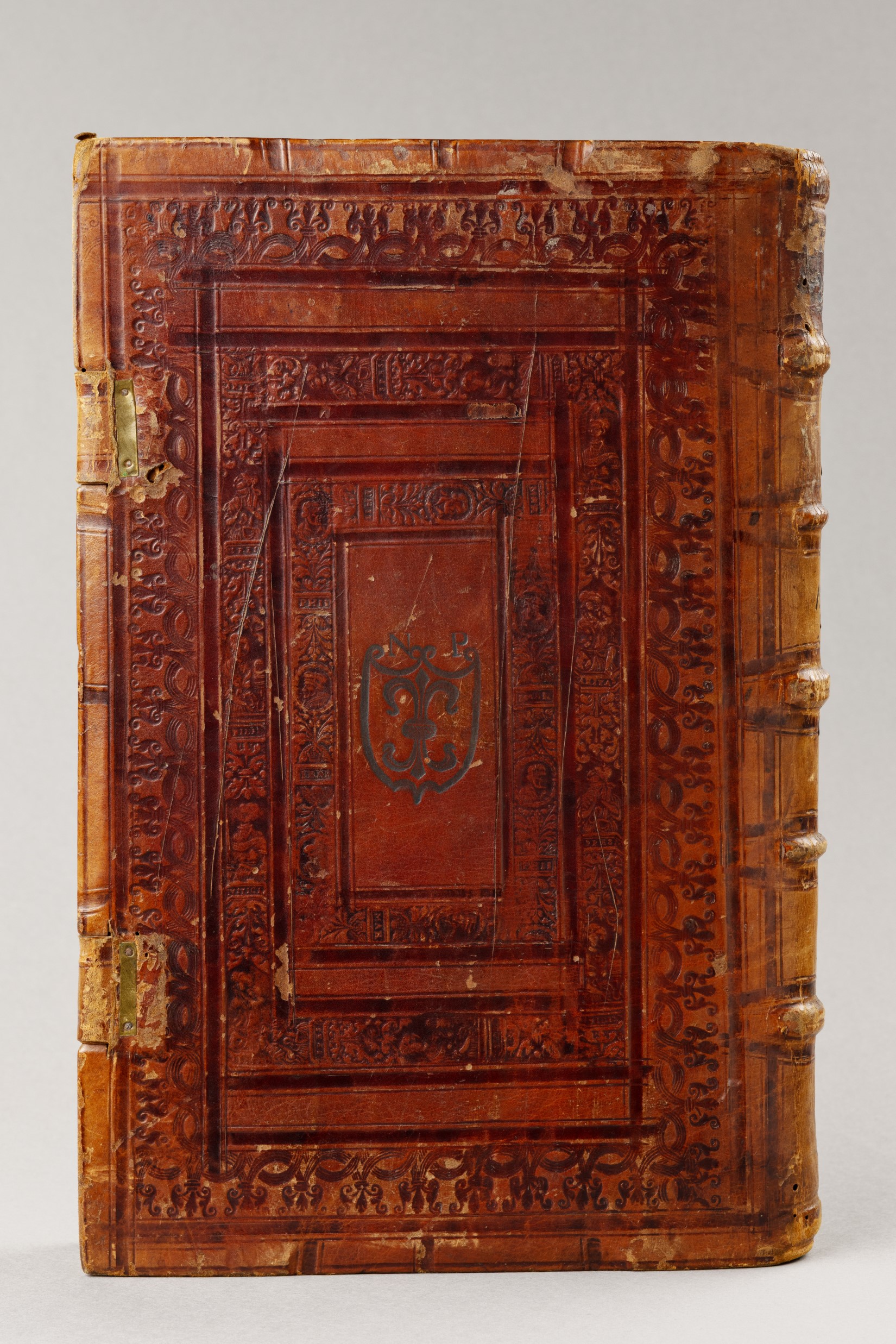
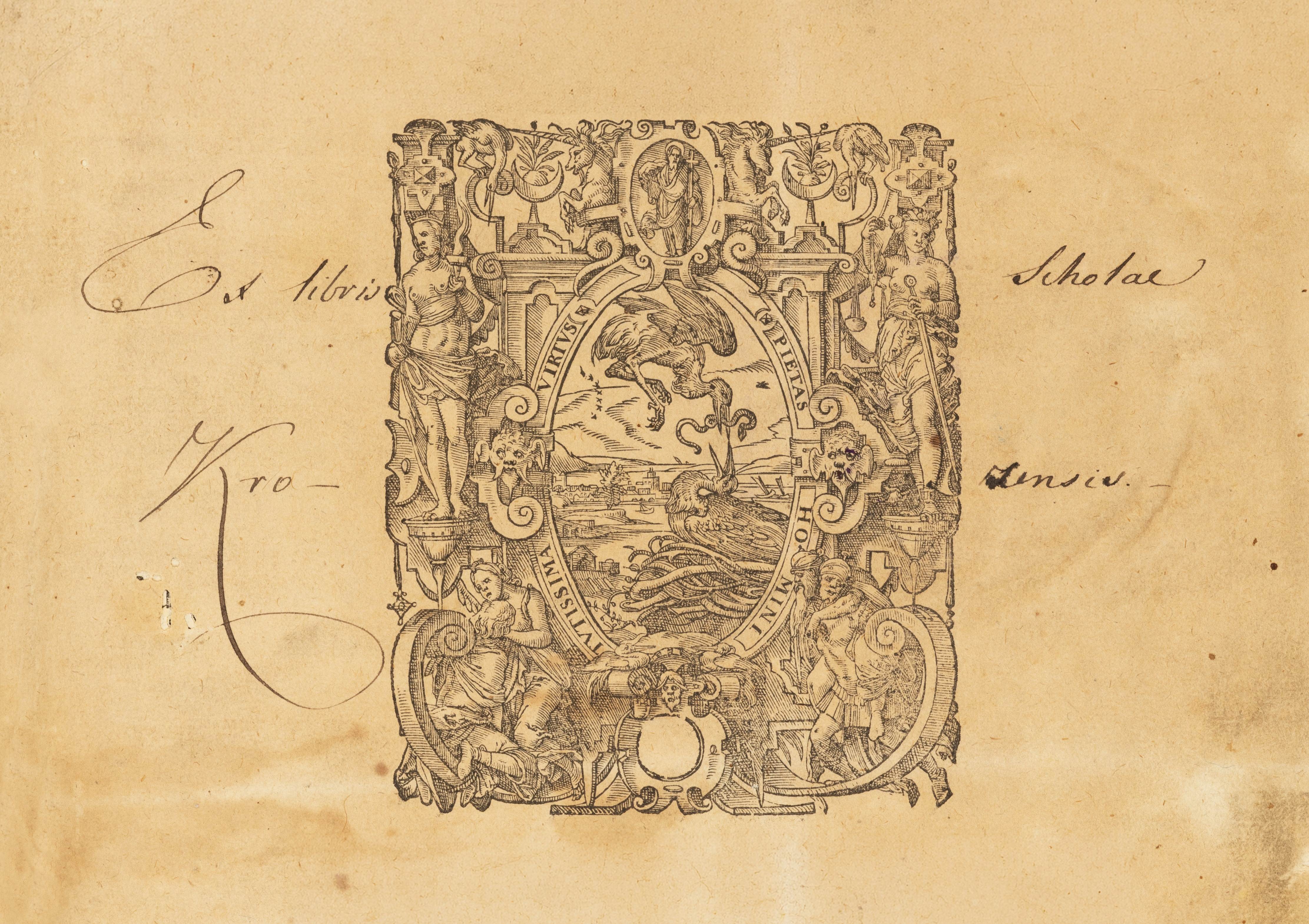
(1) A super ex libris by Mikołaj Pac on the cover of Cyprianus’ book (Basel, 1558); (2) Motiejus Valančius‘ inscription in the book Sánchez, T. (Antwerpen, 1617).
The exhibition displayed in the historic Franciszek Smuglewicz Hall will offer visitors the opportunity to examine the ancient documents—books and manuscripts from the 15th to the 19th centuries. Together, they will provide an insight into the history of books, the world, interdenominational debates, and ecclesiastical and secular law. The oldest printed books—incunabula—attracting attention due to their beautifully arranged text, artistic initials and engravings, will allow visitors to admire the aesthetics of early printing. Meanwhile, the surviving super ex libris in some of these books will serve as a reminder that an old book is not merely a text, but a cultural artefact that has travelled over time, undergone changes and recorded the histories of its various owners.
Exhibition curators: Sondra Rankelienė, Paulius Bagočiūnas. Design: Julijus Balčikonis, Lina Dumbravaitė.
Venue: Vilnius University Library, Franciszek Smuglewicz Hall (Universiteto str. 3, ground floor)
Opening: 15 October 2026 at 4.00 pm. Admission is free; everyone is welcome to attend.
The exhibition will be on display until 19 February 2027. Opening hours: Mondays to Thursdays from 9.00 am. to 5.00 pm.; Fridays from 9.00 am. to 3.45 pm.
Ramunė Gedvilaitė
2026-09-29